Pneumothorax
BTS 2023 guidelines on pleural disease. Key points.
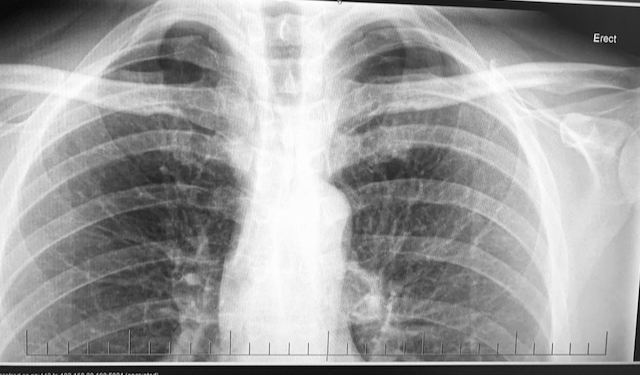
BTS 2023 guidelines on pleural disease:
https://thorax.bmj.com/content/thoraxjnl/78/11/1143.full.pdf
Key Principles / Changes
- The guideline emphasises a symptoms-based approach rather than simply using size of pneumothorax alone.
- Management algorithms now bring together primary spontaneous pneumothorax (PSP) and secondary spontaneous pneumothorax (SSP) in a unified consideration (though underlying lung disease remains an important modifier) rather than strictly separate pathways.
- There is an increased emphasis on conservative management (i.e., observation) for minimally symptomatic patients, even if the pneumothorax is of a moderate size.
- A move toward patient discussion and shared decision-making regarding less invasive vs more invasive management options (“least invasive that is safe and acceptable”) is encouraged.
Assessment and Initial Evaluation
- When a pneumothorax is identified, assess: symptoms (pain, breathlessness), physiological compromise (e.g., hypoxia, tachycardia, hypotension), signs of tension physiology, the presence of underlying lung disease, bilateral disease, etc.
- Imaging (typically chest x-ray) remains key; consider CT if underlying lung disease suspected or to plan potential interventions. (The guideline covers this broadly in the pleural disease context.)
- Risk stratify: for example a patient with an underlying lung disease, bilateral pneumothorax, significant hypoxia or tension features are higher risk and may need early intervention.
Management Options
Here are the main management strategies and the guideline’s comments on them:
- Conservative (Observation) Management
- For patients with minimal or no symptoms and no physiological compromise, conservative management is a viable option.
- Requires careful follow-up (outpatient or day unit) and access to rapid review if symptoms worsen.
- Needle Aspiration (NA) / Small-bore drainage
- Still a valid option for patients with spontaneous pneumothorax who do not need urgent large drainage (i.e., not tension, not severely symptomatic).
- The guideline notes that recurrence rates after NA vs intercostal chest drain (ICD) are similar, but NA might allow shorter hospital stay.
- Chest Drainage (Intercostal Tube Drainage, ICD)
- For those with moderate to severe symptoms, physiological compromise, underlying lung disease, or bilateral disease, ICD is recommended.
- Consideration of tube size and technique is discussed (though more fully in pleural disease section).
- Ambulatory Management / Outpatient Devices
- The guideline mentions ambulatory devices (e.g., small-tube + one-way valve) as an option in appropriately selected patients with good support and follow-up.
- Important: requires patient selection, ability to attend follow-up, and local protocol/support.
- Surgery / Thoracoscopy / Pleurodesis
- For persistent air leaks, recurrent pneumothorax, or patients at high risk of recurrence, surgical review (e.g., VATS, bullectomy, pleurodesis) is appropriate.
- The guideline emphasises that high-risk features (e.g., underlying lung disease, bilateral disease) may push earlier intervention.
Specific Clinical Scenarios & Considerations
- Primary Spontaneous Pneumothorax (PSP)
- In a patient without underlying lung disease, minimal symptoms, conservative management is preferred.
- Larger size alone is not an automatic indication for drainage if symptoms are mild and stable.
- Secondary Spontaneous Pneumothorax (SSP)
- Because of underlying lung disease, physiological reserve is often reduced: lower threshold for intervention.
- Tension pneumothorax / haemodynamic compromise
- Still an immediate emergency: decompression should not be delayed.
- Recurrence & prevention
- Where there are recurrent episodes or persistent air leak, consider early referral for surgical intervention.
- Outpatient follow-up
- Ensure clear discharge plan, patient information (when to return), and imaging/clinical review.
- Advise on things like flying/diving (after full resolution) and lifestyle factors.
Practical Algorithmic Summary for Urgent-Care
Here’s a simplified workflow you might use when a patient presents:
- Confirm diagnosis (clinical + chest x-ray).
- Assess symptoms + physiology (breathlessness, pain, O₂ saturation, heart rate, BP) + risk factors (underlying lung disease, bilateral, size).
- If severe symptoms or physiological compromise or tension features → urgent drainage/ICD and referral.
- If mild/no symptoms, stable physiology → consider conservative management with appropriate follow‐up.
- If intermediate (symptoms but not severe, or underlying lung disease) → consider NA/ICD/ambulatory device based on local resources/patient preference.
- Arrange follow-up review (clinic, imaging), provide patient info about when to return, restrictions (e.g., flying/diving).
- For recurrent episodes or persistent air leak → refer for thoracic surgery/pleurodesis.
Implications for Urgent Care
- In an urgent-care setting, you can confidently observe select patients with spontaneous pneumothorax who are minimally symptomatic, but ensure robust follow-up/community respiratory link or day-unit review.
- Have a low threshold for referral/urgent inpatient review if the patient has underlying lung disease, hypoxia, bilateral pneumothorax or is older/frail.
- Use shared decision-making: discuss options (conservative vs aspiration vs drainage) with patient, explain risks/benefits of each.
- Ensure discharge advice is clear and that patient knows to return if symptoms worsen; consider local logistical issues in NZ (remote settings, access to follow-up).
- Liaise with respiratory/bronchoscopy/Thoracic surgery services locally for recurrent cases.
Limitations & Important Notes
- The guideline is directed at adult patients; children/pediatrics are not covered in detail.
- Evidence is still evolving: e.g., optimal ambulatory device protocols, best timing for surgery/pleurodesis.
- Local resource availability (ambulatory device outpatient support, follow-up clinics) will affect what is feasible.
- Always consider the individual patient context (comorbidities, access to care, social support) when applying the algorithm.
- The guideline is UK-based; while broadly applicable, adapt to NZ healthcare setting and local protocols/referral pathways.